Church Marketing Ideas

Kent Elliott

One of the most impactful improvements we’ve made to our film process didn’t come from new gear, better cameras, or more crew. It came from getting organized.

Specifically: using a visual script.

And the best part? It’s incredibly simple. No complicated systems. No overthinking. Just a clear way to plan what you’re going to shoot, before you ever step on set.

What Is a Visual Script?

A visual script is exactly what it sounds like: a simple document that maps out your video shot-by-shot. Instead of just writing dialogue or ideas, you’re outlining what the viewer will actually see. It bridges the gap between concept and execution…and removes a lot of the guesswork once filming starts.

Step 1: Build a Simple Two-Column Doc

Start with a basic Google Doc. Nothing fancy.

Create two columns:

Left column: Video Info
This is where you define each shot: what’s happening, where it is, who’s involved.

Right column: Script Outline
This is where you write the dialogue, voiceover, or key message tied to that shot.

That’s it. No complicated formatting. No production jargon. Just a clear structure that keeps everything aligned.

Step 2: Use AI to Spark Shot Ideas

Once your structure is in place, you don’t have to come up with every shot from scratch. We’ve found it incredibly helpful to use AI tools to generate prompts and ideas for each scene.

For example, tools like Adobe Firefly (using Google’s Gemini 3.1 model) can help you quickly visualize different angles, moments, or compositions you might not have thought of. It’s not about letting AI take over, it’s about using it to expand your creative options and speed up the planning process.

Step 3: Plan Your Shoot Around the Script

Now your visual script becomes your roadmap.

You can start planning:

  • Locations
  • Timing
  • Talent
  • Equipment

Instead of figuring things out on the fly, you already know what you need to capture. This saves time, reduces stress, and helps your shoot stay focused.

Step 4: Use It On Set

When you’re on-site, your visual script becomes your checklist.
As you capture each shot, mark it off. No guessing. No “did we get that?” moments later. You know exactly what’s done and what’s still needed.

Why This Works

Most video shoots fall apart because of one simple issue: lack of clarity.

People show up with a general idea, but no clear plan. That leads to missed shots, wasted time, and inconsistent results. A visual script fixes that. It keeps everyone aligned. It gives your shoot direction. And it ensures you walk away with exactly what you need.

Final Thought

This isn’t about making your process more complicated, it’s about making it more intentional.

Plan what you shoot.
Shoot what you plan.

It’s that simple. And once you start using a visual script, it’s hard to go back.

www.faithworskimage.com

Share this post

The Simple Filmmaking Upgrade That Changes Everything: A Visual Script Read More »
Kent Elliott

If your church is running Facebook ads (or thinking about it), it’s easy to assume success comes from one thing…a good photo, a catchy line, or the right audience.

In reality, it’s how all the pieces work together. A high-performing ad isn’t random. It’s intentional. Every element has a job, and when they align, the result is simple:

More engagement. More clicks. More first-time guests.

Let’s break down what that actually looks like using a collage-style church ad.

Start by Calling Out Your Local Community

Before anything else, people need to know:

“Is this for me?”

That’s why one of the most effective ways to open your ad is by naming your city or
audience directly.

“Orlando families…”
“Hey Winter Park…”
“Looking for a church in Central Florida?”

This simple move immediately filters the right local people in and everyone else out. Relevance is what stops the scroll.

Lead With a Hook That Feels Personal

Once you have their attention, your next job is to keep it.

The strongest ads don’t start with information, they start with a question or statement that connects to something real:

  • “Looking for a place to belong this Sunday?”
  • “Need a fresh start this week?”
  • “Feel like life’s been a little overwhelming lately?”

This works because it meets people where they are not where the church is.

Make It Human

People don’t connect with institutions, they connect with people.

A simple introduction like:

“Hi, I’m Pastor Mike…”
or
“I’m one of the team here at…”

…can immediately lower walls and build trust. It shifts the tone from “ad” to “invitation.”

Position Your Church as the Outcome

At this point, someone is thinking:
“Okay… so what?”

This is where you clearly communicate the value of your church, not just what you do, but what people experience.

Think in terms of benefits:

  • A place to belong
  • Community for the whole family
  • Encouragement and hope for the week ahead
  • A safe place to explore faith

You’re not just inviting them to a service you’re offering something meaningful.

Give Clear, Simple Details

Once someone is interested, don’t make them work to figure out the basics.

Include:

  • Service times
  • Location
  • Anything helpful for a first-time visitor (kids, parking, etc.)

Clarity removes friction and friction kills action.

The Visual: Your Collage Ad

Now let’s talk about what people actually see first.

A strong collage ad should do one thing really well:

Help someone picture themselves there.

That’s why the best photos are:

  • Authentic (not overly staged)
  • Emotionally clear (joy, connection, warmth)
  • People-centered (faces over buildings)

Great collage images often include:

  • A welcoming moment (greeting, smiling faces)
  • A connection moment (conversation, laughter)
  • A meaningful moment (worship, teaching, reflection)
  • A family or kids moment (if applicable)

Before someone reads a word, your visuals are already answering:
“Would I feel comfortable here?”

The Headline: The Scroll-Stopper

Even with strong visuals, your headline plays a critical role.
Its job is simple:

Make someone pause.
This is not the place for:
“Sunday Service at 10AM”

Instead, think:

  • “Start Your Week With Hope”
  • “You Don’t Have to Do Life Alone”
  • “There’s a Place for You Here”

A strong headline reinforces the emotional pull of your ad and gives people a reason to engage.

The Description: Reinforce the Benefit

This is the short line under your headline and it’s often overlooked.

Use it to support your message with a clear benefit:

  • “Join us this Sunday and experience community that feels like home.”
  • “A welcoming church for you and your family.”

It doesn’t need to be long. It just needs to be clear.

The Call to Action: Where It All Leads

Every ad needs a next step. For most church ads, that’s a “Learn More” button.
But what happens after the click is just as important as the ad itself.

When someone clicks, they’re taken to a simple form where they can plan their visit. From there:

  • They receive helpful, automated text follow-ups leading up to Sunday
  • Your team has the opportunity to personally reach out and connect
  • You’re no longer hoping they show up, you’re guiding them there

The follow-up is where the real conversion happens.

Final Thought

A great Facebook ad isn’t about being flashy, it’s about being intentional.

When you:

  • Call out the right people
  • Speak to real needs
  • Show authentic community
  • And create a clear next step

…you move from just “running ads” to actually reaching people.

And that’s the goal.

www.faithworskimage.com

Share this post

The Anatomy of a High-Performing Church Facebook Ad Read More »

Kent Elliott

When most churches create ads, they tend to focus on the details: service times, location, what to expect. But the reality is, none of that matters if people never stop scrolling. And that’s exactly where your headline comes in. Your headline isn’t just a line of text. It’s the gateway to your entire message. If it doesn’t work, the rest of your ad doesn’t get seen.

The Reality of Attention Online

People aren’t carefully reading ads on social media. They’re moving fast, scrolling quickly, and filtering constantly. You have about 1–2 seconds to earn their attention.

That means your headline has one job:
Make someone pause.

If it doesn’t, everything else… your visuals, your message, your invitation…gets skipped.

What a Strong Headline Actually Does

A good headline doesn’t try to say everything. It does a few key things really well:

1. It Stops the Scroll

Your headline should create just enough curiosity, emotion, or relevance to interrupt someone’s pattern.

Think:
“Looking for a place to belong this Sunday?”
“What if one hour could change your whole week?”

These work because they feel personal and relevant, not generic.

2. It Answers “Why Should I Care?”

Every person who sees your ad is subconsciously asking:
“What does this have to do with me?”

A strong headline answers that immediately.

Compare:

“Join us this Sunday” vs. “Start your week with hope”

One is an announcement. The other is a benefit.

3. It Calls Out the Right People

The goal isn’t to reach everyone. It’s to reach the right people.

A more specific headline might say:
“Busy parents, this hour could change your week”
“If you’ve been feeling a little lost lately, you’re not alone”

When someone feels seen, they’re far more likely to engage.

4. It Drives the Click

Even with great visuals, your headline is often what pushes someone to take action. It reinforces the promise and gives people a reason to learn more. Without a strong headline, even a well-designed ad can underperform.

5. It Sets the Tone for Everything Else

Your headline shapes how your entire ad is perceived. It tells people whether your church feels:

  • Welcoming or formal
  • Relevant or outdated
  • Personal or generic

That first impression matters more than most realize.

The Most Common Mistake Churches Make

Most church ads default to headlines like:

“Join Us This Sunday”
“All Are Welcome”
“Sunday Service at 10AM”

While these are true, they don’t create interest or connection. They don’t answer why someone should come. They simply state that they can. And in a fast-moving feed, that’s not enough.

A Simple Shift That Changes Everything

Instead of asking:
“What do we want to say?”

Start asking:
“What does someone need to hear right now?”

That shift moves your headline from informational to invitational. From generic to personal. From ignorable to engaging.

A Quick Gut-Check

Before you run your next ad, ask:
Would this headline make someone pause for even a second?
Would it feel relevant to someone who doesn’t already go to our church?

If not, it’s worth refining.

Final Thought

Your headline isn’t just part of your ad, it’s the part that determines whether the rest of it matters.

Get that right, and everything else has a chance to work.

Get it wrong, and even your best content may never be seen.

www.faithworskimage.com

Share this post

Why Your Church Ad Headline Matters More Than You Think Read More »

Kent Elliott

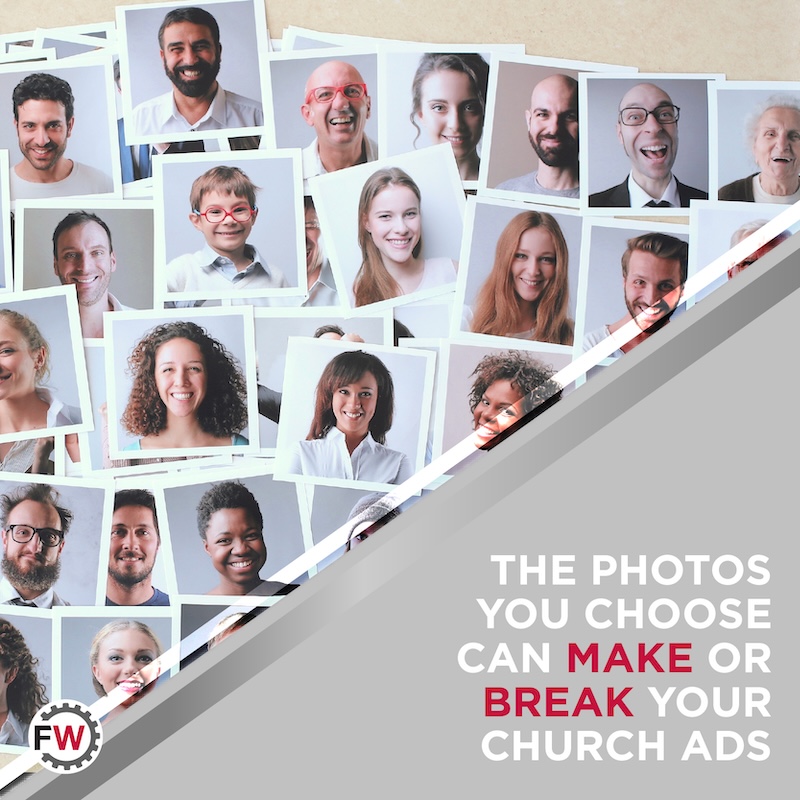
When it comes to running effective church ads, most people focus on the message, the headline, or the targeting.
But there’s one element that often gets overlooked and it might matter the most:
Your photos.

Especially with collage-style ads, your images aren’t just supporting the message…
they are the message.

Before someone reads a single word, they’re already asking:
“Do I feel comfortable here? Are these my kind of people?”

The right photos answer those questions instantly.

What Makes a “Good” Photo for Church Ads?

At the core, strong church ad photos are:
Authentic, emotionally clear, and people-centered images that help someone picture themselves belonging in your community.

Here’s how to make sure the photos you’re using actually do that:

1. Real Moments Beat Staged Perfection

Highly posed, overly polished photos tend to feel distant.
What works better? Real, candid moments.

Look for:

  • People laughing together
  • Genuine conversations
  • Natural interactions before or after service

Slightly imperfect but real will almost always outperform something that feels staged.

2. People Matter More Than the Building

Your space is important but it’s not what creates connection.
Close-up shots of people smiling, engaging, and interacting will go much further than wide shots of an empty sanctuary.

People connect with people.

3. Reflect the Audience You Want to Reach

Visitors are subconsciously asking:
“Are there people like me there?”

If you’re trying to reach:

  • Young families → show young families
  • Young adults → show that environment
  • A diverse community → reflect that clearly

Alignment here is key.

4. Show the Full Experience (Not Just the Stage)

Church isn’t just what happens during the message.
Some of the most effective images come from:

  • Conversations in the lobby
  • Coffee moments before or after service
  • Kids check-in or classrooms
  • Volunteers greeting guests
  • Worship and engagement

These moments help people understand what it actually feels like to be there.

5. Create a Mix of Moments in Your Collage

A strong collage tells a story.

Try to include a balance of:

  • A welcoming moment
  • A connection moment
  • A meaningful or worship moment
  • A family or kids moment (if applicable)

This variety gives a fuller, more inviting picture of your church.

6. Keep It Visually Consistent

Even in a collage, your photos should feel like they belong together.

Aim for:

  • Similar lighting
  • Consistent color tones
  • Clear, high-quality images

Mixing dark, grainy photos with bright, polished ones can feel disjointed and reduce trust.

A Simple Gut-Check

If someone saw your photos with no text at all, would they think:
“That feels warm, real, and like a place I could walk into.”

If the answer is yes, you’re on the right track.

Final Thought

The goal of your church ads isn’t just to inform, it’s to invite.
And the right photos help people take that first step before they’ve even read a word.

If you’re ever unsure what to use, send over a batch of photos. A second set of eyes can help identify the strongest images that will actually connect and convert.


Why Your Church Ad Headline Matters More Than You Think

www.faithworskimage.com

Share this post

The Photos You Choose Can Make or Break Your Church Ads Read More »

Kent Elliott

One of the most powerful ways a church can improve its SEO is by adding a blog page to its website.

Many churches assume blogging is complicated or time-consuming. In reality, pastors are already creating meaningful content every single week… it’s called their sermon.

With just a little formatting, a sermon can easily become a blog post. The hard work…studying the Scriptures, preparing the message, and writing the outline, has already been done. A blog simply gives that message another place to live online.

When sermons are published as blog posts, something powerful happens.

Every day, people around the world search the internet for help, hope, and guidance on faith-related topics. They ask questions like:

  1. How do I deal with anxiety?

  2. Bible verses about forgiveness

  3. What does the Bible say about marriage?

  4. How can I trust God during hard times?

These searches represent real people looking for answers, encouragement, and spiritual direction.

When your church publishes blog posts that address these same topics, search engines like Google can begin showing your church website to people who are actively searching for those answers.

In other words, your sermons don’t have to stop reaching people when Sunday service ends. They can continue reaching people all week long, anytime someone searches for encouragement, truth, or biblical wisdom.

A blog turns your church website into a place where people can discover your ministry before they ever walk through your doors.

It becomes a digital front door for your church.

Someone searching for hope at midnight on a Tuesday might find a sermon your pastor preached months ago. That message could be the first step in their journey toward faith, healing, or connection with a church community.

Adding a blog is one of the simplest and most effective ways for a church to extend its digital outreach. It allows the message God has placed on your church’s heart to reach far beyond the walls of your building, connecting with people who may be searching for faith, encouragement, or direction right now.

www.faithworskimage.com

Share this post

The Value of SEO Read More »

Kent Elliott

What’s Driving You?

The world moves fast. Deadlines stack up. Events fill the calendar. Services must be planned. Messages prepared. Campaigns launched. Metrics reviewed. Technology keeps shifting.

It’s easy to feel like we are being pulled along by whatever is most urgent.

But today, pause and ask a deeper question.

To drive something means to guide it, control it, direct it. If pressure drives us, pressure will control our pace. If deadlines drive us, urgency will define our pace. If approval drives us, people’s opinions will shape our sense of worth.

And all of those drivers eventually wear us down.

You and your team are not just pastors, staff members, volunteers, or ministry leaders. You are not just planning services, coordinating events, designing promotions, or building programs.

You are stewarding something eternal.

Jesus said in the Gospel of John 10:10, “I have come that they may have life, and have it to the full.” That promise is not just for Sundays. It is for Mondays in the office. It is for planning meetings, creative sessions, deadlines, and decisions.

If we are not careful, even good things, like ministry work, church partnerships, and meaningful campaigns can begin to drive us in unhealthy ways. Slowly, we can shift from being purpose-driven to pressure-driven.

And there is a difference.

When pressure drives us, we feel
• Rushed
• Drained
• Reactive
• Never quite finished

But when purpose drives us, we feel
• Grounded
• Focused
• Steady
• Aligned

Colossians 1:16 reminds us that everything finds its purpose in Him. That includes you and your team. That includes every sermon, announcement, graphic, strategy session, and event you lead.

We were not created to chase every trend or meet every expectation. We were created to fulfill God’s purposes.

And those purposes are simple:
• Know Him.
• Grow in Him.
• Serve others.
• Share His message.

That is what gives meaning to what you do.

Romans 6:13 encourages us to offer ourselves fully to God. That includes our leadership, our creativity, our ideas, and our time.

When we give Him our work, it stops being just work. It becomes worship.

We do not have to carry the emotional weight of every outcome. We do not have to solve everything at once. Jesus teaches in the Gospel of Matthew 6:11 to ask for daily bread, daily provision, daily direction.

Just today’s grace. Just today’s clarity. Just today’s strength.

And as we walk in that daily dependence, we trust what Ephesians 3:20 promises: that God can do far more than we ask, think, or imagine. Even through a church team. Even through planning, communication, and storytelling. Even through us.

So today, let’s realign.

If you feel tired, overwhelmed, or stretched thin, remember this: you are not driven by deadlines. You are not driven by performance.

You are driven by purpose.

And when God directs your work, there is peace in the process, clarity in the calling, and eternal impact in the labor.

Let’s allow Him to guide, control, and direct us, one day at a time.

Adapted from “What’s Driving Your Life” by Rick Warren


www.faithworskimage.com

Share this post

What’s Driving You? Read More »

Kent Elliott

Many churches focus heavily on the invitation …and invitations matter, but the real impact doesn’t come from the invite alone. It comes from the engagement that follows it.

If someone receives an invite but never experiences a personal response, conversation, or follow-up, it’s not much different than leaving a door hanger on their front door. The invitation may get their attention for a moment, but it rarely builds a relationship.

Engagement is what turns a simple invite into a real connection.

Why Engagement Matters Before Sunday

For most people, the decision about whether they feel comfortable visiting a church happens long before Sunday morning.

When churches respond quickly to messages, answer questions, and interact with guests during the week, it begins to build something incredibly important: familiarity and trust.

Instead of feeling like a stranger walking into an unfamiliar place, the guest begins to feel:

  1. Seen

  2. Welcomed

  3. Expected

That shift can make all the difference between someone thinking about visiting and actually walking through the doors.

The Power of the Saturday Video

One of the most effective engagement tools is the Saturday video message.

A short video from a pastor or team member gives potential guests something powerful: a face and a voice connected to the church.

Before they ever step inside the building, they’ve already had a small personal interaction.

When guests arrive on Sunday and recognize someone from the video, it immediately lowers the barrier of walking into a new place. Instead of feeling anonymous, they feel like they’re stepping into a place that already feels a little familiar. Even a simple 30–60 second message can have a big impact.

Start the Connection Early in the Week

Another simple but important step is organizing your guest leads early in the week.

When leads are organized promptly, it triggers the automated messages and nurture sequences that help begin the connection process. This gives your church several days to build familiarity and engagement before the next Sunday arrives. The earlier the process begins, the more opportunities there are for meaningful interaction.

From Curious to Ready to Visit

Every interaction matters.

A quick reply to a message.

A thoughtful follow-up.

A friendly Saturday video.

Each touchpoint moves someone a little further along the journey…from “just curious” to “ready to visit.”

And when that happens, the invitation becomes something more than a message.

It becomes the beginning of a relationship. ✨

www.faithworskimage.com

Share this post

The “Why” Behind Engagement Read More »

Kent Elliott

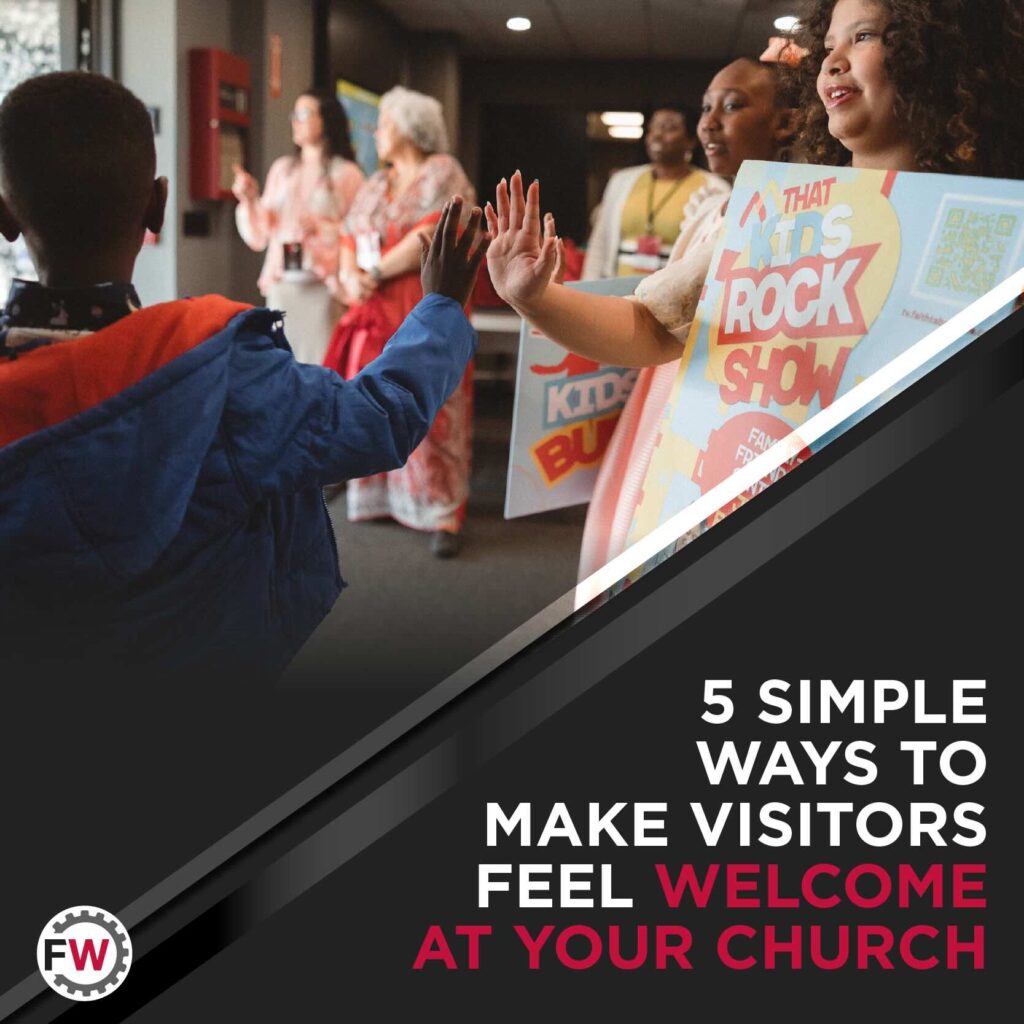
Creating a warm, inviting atmosphere is one of the most powerful ways a church can share the love of Christ. When visitors walk through your doors, those first few minutes often shape their entire experience. The good news? Making people feel welcome does not require elaborate programs or big budgets. It simply requires intentionality and genuine care.

Here are five simple, practical ways to help newcomers feel right at home in your church.


1. Warm, Friendly Greeters

A genuine smile can make all the difference. Position greeters at your entrances to offer a warm welcome, answer basic questions, and point visitors in the right direction. This small gesture helps reduce that “new place” anxiety and sets a positive tone before the service even begins.


2. Use Clear, Helpful Signage

Navigating an unfamiliar building can be stressful for visitors. Clear signage directing people to the sanctuary, restrooms, children’s check-in, and other key areas helps newcomers feel confident and comfortable. Think of it as removing unnecessary barriers so people can focus on the service instead of figuring out where to go.


3. Encourage Engagement Before the Service

A simple conversation can make someone feel seen and valued. Encourage members to look around before the service begins and greet someone they do not recognize. Even a brief introduction, an offer to show someone around, or a friendly question like “Is this your first time visiting?” can go a long way.


4. Follow Up With Gratitude

The welcome should not end when the service does. A thoughtful follow-up, whether by email, text, or a handwritten note, shows visitors that you appreciated their presence and truly hope they return. Include resources they may find helpful or easy next steps to get involved.


5. Use Inclusive, Accessible Language

Church terminology can be confusing for newcomers. Make an effort to use clear, inclusive language during your services, announcements, and printed materials. Briefly explaining traditions or practices also helps visitors feel included rather than left behind.


Hospitality is a ministry in itself. By taking simple, intentional steps like these, churches can create an environment where visitors not only feel welcomed but encouraged to return. A warm church is often a growing church, and your efforts can make a lasting impact.

At FaithWorks, we specialize in local church growth. From digital strategies to branding and guest follow-up systems, we help churches like yours reach more people and do more ministry, without burning out your staff or your budget.

If you’re ready to take your church growth to the next level, we’d love to help.

Let’s grow together. 

www.faithworskimage.com

Share this post

5 Simple Ways to Make Visitors Feel Welcome at Your Church Read More »

Kent Elliott

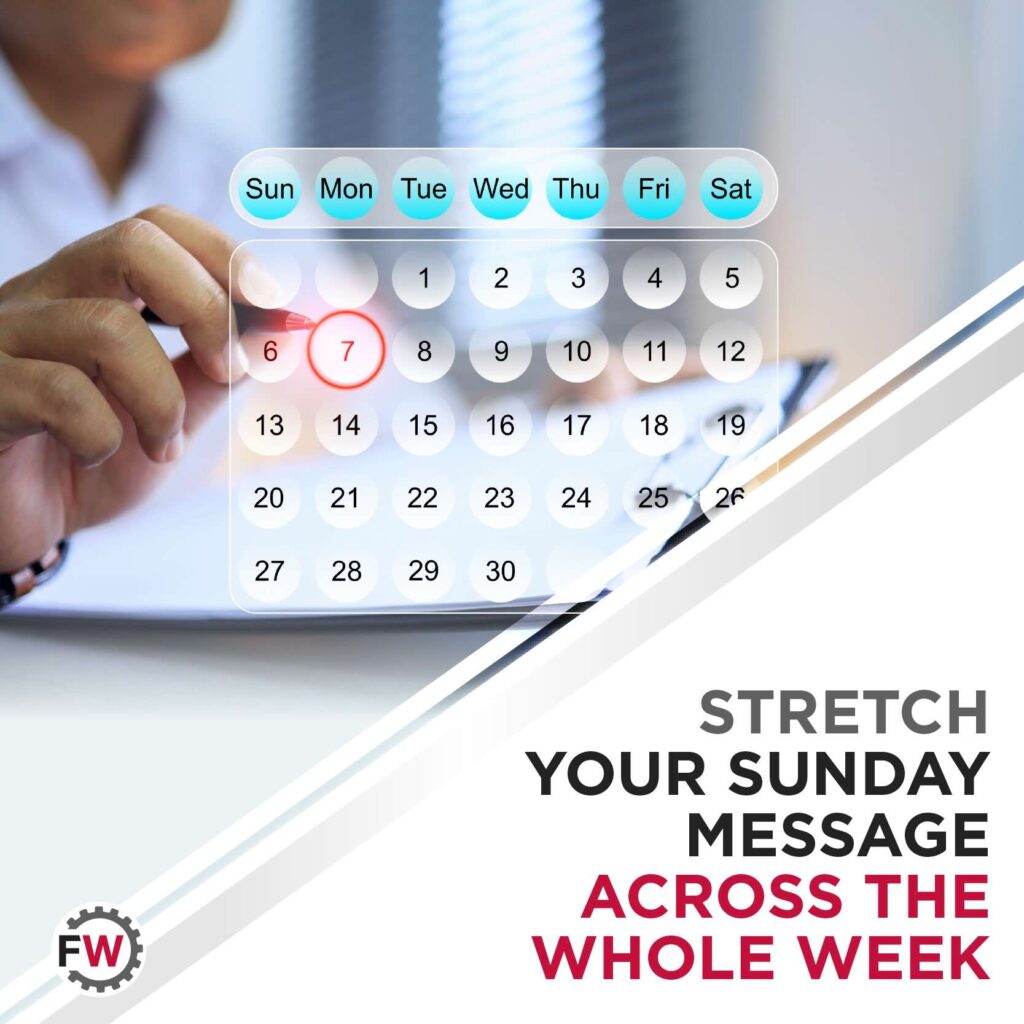
Every pastor pours heart, prayer, and preparation into crafting a powerful Sunday message. But here’s the challenge: by Monday morning, most people have already moved on with their week.

So how do you make sure your sermon doesn’t fade into the background?

Repurpose it. Reuse it. Reinforce it.
One message can create multiple touchpoints that keep truth alive in the hearts of your church all week long.

Here’s a simple, practical weekly rhythm you can start using right away:


Monday: Share a 15-Second Video Clip

Kick off the week with a short highlight reel. Pick a strong quote, a powerful moment, or a key takeaway from Sunday’s message. Keep it quick and punchy—something people can watch in the car line or on their coffee break.


Wednesday: Post a Midweek Reflection

Revisit one point from the sermon and offer a brief reflection. This midweek reminder helps refocus hearts and minds right when the week’s busyness begins to peak.


Friday: Create a Quote Graphic or Reel

Choose a memorable line from the message and turn it into a shareable graphic or short reel. People love saving and sharing inspirational content—let your sermon become part of that daily encouragement.


Saturday: Spark a Conversation

Ask a simple, related question to prepare your congregation for Sunday. Something like:

  • “What’s one way you saw God work this week?”

  • “Where are you praying for breakthrough?”

It warms up engagement and creates anticipation for what’s coming next.


One Message. Multiple Touchpoints. Greater Impact.

Your sermon doesn’t have to live only on Sunday. With a little intentionality, it can echo throughout the entire week—reaching more people and reinforcing transformation.


At FaithWorks, we specialize in local church growth. From digital strategies to branding and guest follow-up systems, we help churches like yours reach more people and do more ministry—without burning out your staff or your budget.

If you’re ready to take your church growth to the next level, we’d love to help.


Let’s grow together.


www.faithworskimage.com

Share this post

Stretch Your Sunday Message Across the Whole Week Read More »

Kent Elliott

Whether you’re a new church plant or a decades-old congregation, every church shares a common mission: to reach people with the hope of the Gospel and help them grow in their faith. But how do you make that happen in today’s fast-changing world?

At FaithWorks, we’ve helped churches of all sizes and stages grow stronger in their mission. Over the years, we’ve found that churches who experience sustainable growth have these five key elements in place:

1. God’s Help

Before anything else, we have to acknowledge this truth: growth begins with God.

“I planted, Apollos watered, but God gave the increase.” — 1 Corinthians 3:6

You can have the best plans, teams, and tools in place—but without God’s blessing, it won’t last. Prayerful planning and spiritual discernment must be the foundation of every growth strategy.

2. A Strong Online Presence

Your website and social media are now your digital front door. If people can’t find you online, they may never walk through your physical doors.

Here’s what matters most:

  • Active, engaging social media accounts

  • Targeted social media advertising

  • A user-friendly, modern website that reflects your church’s mission and makes it easy to get involved

People are searching for hope every day—make sure they can find you.

3. Community Outreach & Awareness

It’s not enough to open your doors and hope people show up. Outreach creates opportunities for relationship.

Churches that grow are intentional about:

  • Community-focused events

  • Branded signage and print materials

  • Direct mail campaigns

  • Consistent and clear church branding

The goal? Make your presence known in a way that serves and invites, not just promotes.

4. Intentional Guest Follow-Up

It’s exciting when new faces show up on a Sunday—but what happens next?

A healthy follow-up system should:

  • Connect with guests within 24–48 hours

  • Offer clear next steps for engagement

  • Continue communication for second- and third-time guests

  • Help visitors feel seen, valued, and included

Turning guests into members doesn’t happen by accident—it happens by design.

5. Quality, Distraction-Free Streaming

Live streaming is here to stay. Whether you’re reaching homebound members, out-of-state family, or seekers just exploring faith, your online experience matters.

Streaming that helps churches grow includes:

  • A private channel for control and consistency

  • High production quality to keep viewers engaged

  • No ads or comment distractions that take away from the message

Your online worship should reflect the excellence and reverence you bring to your in-person services.

Final Thoughts: It’s Not Just Strategy—It’s Ministry

Growth isn’t about becoming a “big” church. It’s about being faithful with the people and potential God has given you. And sometimes, you just need the right support to do that well.

At FaithWorks, we specialize in local church growth. From digital strategies to branding and guest follow-up systems, we help churches like yours reach more people and do more ministry—without burning out your staff or your budget.

If you’re ready to take your church growth to the next level, we’d love to help.

Let’s grow together. 
[Schedule a Call] | [Learn More]

FaithWorks Image Consulting 

www.faithworskimage.com

Share this post

 5 Things Every Church Needs to Grow (And How to Start Today) Read More »